Why Is My Las Vegas Home Not Selling? A Seller's Diagnostic Checklist
Quick answer: A Las Vegas home may not sell because its price, presentation, showing access, marketing or condition does not match buyer expectations. Start by comparing your listing with similar active, pending and recently sold homes. Then review online activity, showing feedback and any failed escrows to decide whether to adjust the price, improve the property or change the marketing.
It's frustrating to watch other homes go under contract while yours stays on the market. The good news is that a stalled listing almost always sends signals you can read, such as how many showings you're getting, what buyers say afterward, and how your home compares with the competition. This guide explains how to diagnose the problem and what to change.
Las Vegas Market Context: September 2026
h&e's September 2026 Market Report, based on Las Vegas REALTORS® MLS data, provides regional context for sellers. The figures below describe Southern Nevada property categories and should not replace a neighborhood and price-range comparison.
Metric | Single-family homes | Condos and townhomes |
|---|---|---|
Median sale price | $470,000 | $290,000 |
Median list price, listings without offers | $529,999 | $270,000 |
Listings without offers | 7,995 (up 6.6% year over year) | 2,796 (up 7.3%) |
Months of supply | 4.6 (up 15.1% year over year) | 6.6 (up 22.8%) |
New listings in September | 3,120 | 868 |
What this means for a stalled listing:
- Supply is up. Single-family supply reached 4.6 months, up 15.1% from a year earlier. Condo and townhome supply reached 6.6 months, up 22.8%. Buyers can afford to be selective.
- Asking and sold medians describe different groups of homes. Unsold single-family listings have a higher median asking price than recently sold homes, but the roughly $60,000 difference does not measure overpricing or the discount a buyer can expect. Property size, condition, location and the mix of listings can affect both figures.
- New competition arrives every month. More than 3,000 new single-family listings came on the market in September alone, so your home is competing with fresh inventory every week.
Step 1: Read the Signals Your Listing Is Sending
Before you change anything, look at where buyers are dropping off. Each pattern points to a different problem.
What you're seeing | Likely cause |
|---|---|
Few online views or saves | Price is outside buyers' search ranges, or the photos and headline aren't drawing clicks |
Good online views but few showings | Price looks high next to competing listings, or showings are hard to book |
Plenty of showings but no offers | The home doesn't match what the photos promised, condition issues, or the price is high for what buyers see in person |
Offers well below asking | Buyers see the home as overpriced or are pricing in repairs |
Escrows that keep falling apart | Inspection or appraisal problems, or HOA and title issues |
Ask your agent for showing counts, online activity and written buyer feedback. Patterns across several showings matter more than any single comment.
Step 2: Compare Your Home to the Current Competition
Buyers don't judge your home on its own. They judge it against every other home they're touring that weekend. Have your agent pull three sets of listings in your area:
- Active listings similar to yours. These are your direct competition.
- Pending listings that went under contract recently. These show what buyers chose over your home.
- Closed sales from the past few months. These show what buyers actually paid, and what an appraiser will rely on.
Questions to ask about each comparable:
- Price per square foot. How does yours compare, adjusted for size, lot and upgrades?
- Condition. Is it updated or original? Pool or no pool? Single-story or two-story?
- Time on market. How long has each one been listed, and has its price changed?
- Incentives. Is the seller offering closing-cost credits or rate buydowns?
- New construction. Are nearby builders offering incentives that resale homes have to compete with?
If comparable pending homes offered more at a similar asking price, review your positioning. A pending listing's asking price is not its final sale price; negotiated prices and concessions may not be available until closing.
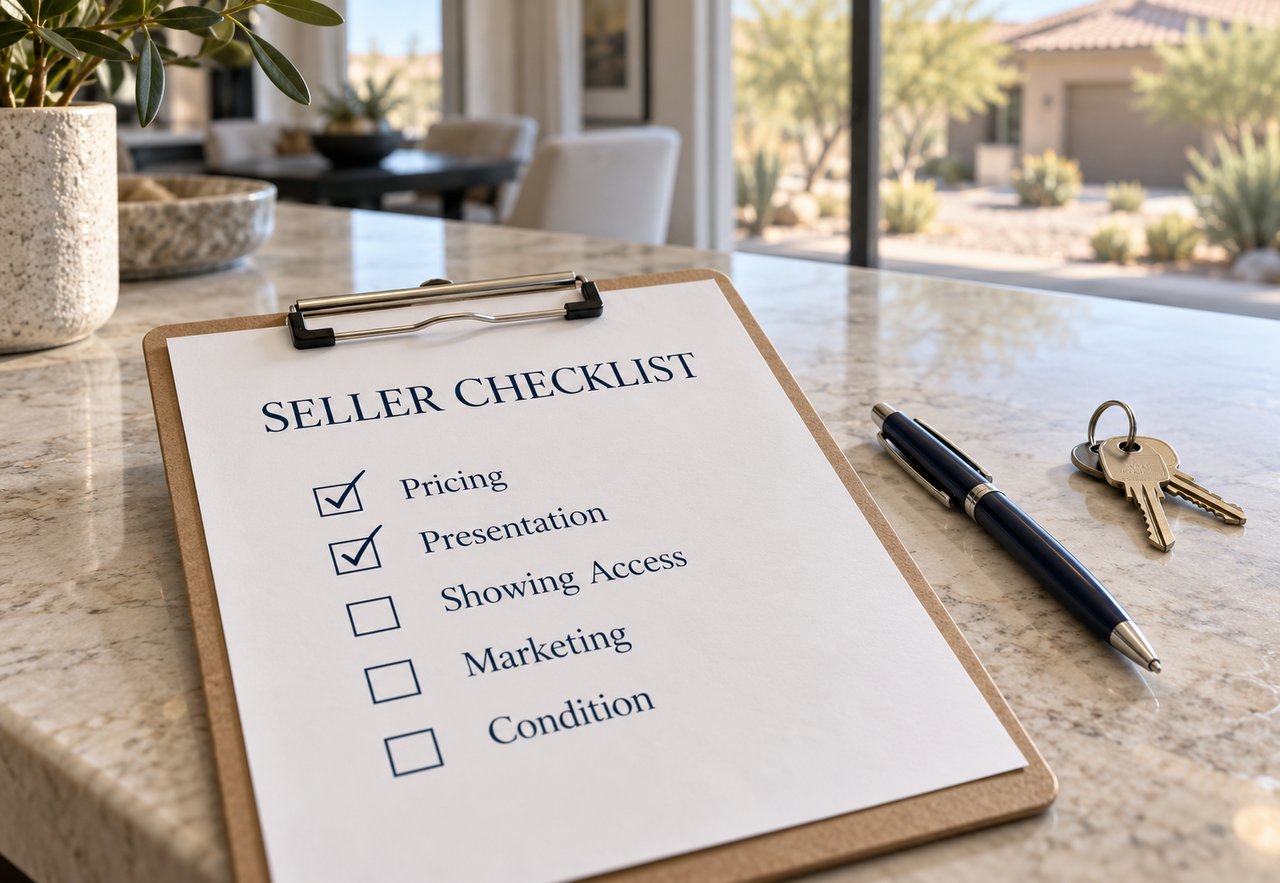
The Seller's Diagnostic Checklist
1. Pricing
- ☐ Is your list price supported by recent closed sales, not just by other active listings?
- ☐ Is your price per square foot in line with the homes that went pending recently?
- ☐ Is your price just above a common search cutoff (for example, $505,000 instead of $499,000), so many buyers never see it?
- ☐ Is the price supported by comparable sales? If an appraisal comes in below the contract price, the parties may need to renegotiate or the buyer may need additional cash, depending on the loan and contract.
- ☐ Have you been on the market for several weeks with little activity? If so, consider an adjustment supported by comparable sales and competing inventory, rather than repeated reductions without a clear plan.
- ☐ Would a seller credit toward the buyer's closing costs or a rate buydown attract more buyers than a price cut of the same amount?
A lender-approved rate buydown may reduce the buyer's payment for a defined period or over the loan term, depending on the structure. Compare the cost and benefit with a price adjustment. Contribution limits and eligibility vary by loan program, so buyers should confirm options with their lender, such as h&e's mortgage partner note..
2. Presentation
- ☐ Are your listing photos professional, bright and taken at the right time of day?
- ☐ Does the first photo show the home's strongest feature?
- ☐ Is the home decluttered, depersonalized and deep-cleaned?
- ☐ Are there odors from pets, smoke or cooking?
- ☐ Is the home staged or furnished in a way that shows how each room can be used?
- ☐ Is the front yard clean, the desert landscaping trimmed and the entry inviting?
- ☐ Is the backyard set up as usable outdoor living space, especially if there's a pool?
- ☐ Is the house comfortable during showings? Keep the AC at a reasonable temperature in summer.
3. Access
- ☐ Can buyers' agents book showings easily, including evenings and weekends?
- ☐ Is there a lockbox, or does every showing require coordination?
- ☐ If the home is tenant-occupied, is the tenant cooperative, and is the home presentable?
- ☐ Are pets secured or removed during showings?
- ☐ If the home is in a gated community, do buyers' agents know how to get through the gate?
- ☐ Are showing requests getting fast confirmations?
4. Marketing
- ☐ Is the listing description accurate, specific and free of errors?
- ☐ Does the description highlight what buyers search for, such as single-story layout, pool, RV parking, solar, upgrades and community amenities?
- ☐ Is the MLS data complete and correct, including square footage, bedrooms, HOA dues and school assignments?
- ☐ Does the listing include a floor plan, video or virtual tour?
- ☐ Is the home being promoted to agents and buyers beyond the MLS?
- ☐ Is the listing reaching out-of-state buyers relocating to Las Vegas?
5. Property Condition
- ☐ Have obvious repairs been made, such as leaks, damaged tile, cracked stucco, broken fixtures or worn flooring?
- ☐ Is the air conditioning working well, and do you have its service records?
- ☐ Is the pool clean, with the equipment running?
- ☐ Would a pre-listing inspection help you fix or disclose issues before a buyer's inspection finds them?
- ☐ Are there dated finishes that buyers are mentally pricing in? Consider paint, fixtures or a credit.
- ☐ Are your disclosures complete? Review Nevada's seller disclosure requirements and applicable exceptions with your agent. NRS 113.130 addresses delivery of the disclosure form; confirm the deadline and any additional obligations for your transaction.
- ☐ Are HOA documents, solar contracts and warranty information ready to hand over?
When to Change Course
Use these as review checkpoints, rather than fixed deadlines. Expected market time varies by neighborhood, price range, property type, season and current competition:
- After 2 to 3 weeks with few showings: Review price and photos first, since those are what buyers see before they decide to visit.
- After several showings with no offers: Focus on condition, presentation and how your home compares in person with the homes buyers chose instead.
- After about 30 days with little activity: Compare your results with similar homes listed during the same period. If comparable properties are attracting offers and yours is not, discuss a supported price adjustment, buyer incentive or presentation change.
- After repeated canceled escrows: Find out why. Review inspection findings, financing, appraisal results, HOA documents and title concerns to identify what can be resolved before another contract.
- If the season has turned: Ask your agent whether it makes sense to stay on the market, or to pause, refresh the listing and relaunch when buyer activity picks up.
How huntington & ellis Helps Las Vegas Sellers Reassess a Listing
At huntington & ellis, A Real Estate Agency, our agents help sellers evaluate pricing, presentation and marketing in the context of the homes buyers are comparing. A useful review looks at recent comparable sales, active and pending competition, showing feedback, listing photos and the costs of potential improvements or concessions.
A listing in Summerlin may compete with different homes than one in Henderson, Southern Highlands or North Las Vegas. Even within a community, lot size, single-story layouts, pools, HOA dues, solar agreements and nearby builder incentives can change the comparison. The goal is a plan based on your property's position in its specific market.
For more context, read our Las Vegas home price analysis and guide to Las Vegas homes selling below asking price, or explore our home selling services.
Frequently Asked Questions
Why is my house not selling in Las Vegas?
Start with price, then review presentation, showing access, marketing and condition. Few showings can point to pricing or online presentation; repeated showings without offers may indicate that buyers see better value in competing homes. Use comparable listings and consistent feedback to identify the cause.
How long should it take to sell a house in Las Vegas?
There is no single timeline for every Las Vegas home. Compare days on market for similar homes in your neighborhood and price range. Time to accept an offer and time to close are separate measures; financing, inspections, appraisal and contract terms can affect the closing schedule.
Should I lower my price or wait?
If you've had little activity for several weeks, waiting rarely fixes a pricing problem. New listings keep coming on the market, and long market times can make buyers wonder what's wrong. Ask your agent whether a price adjustment is supported by recent closed sales, competing inventory and buyer feedback. Pending listings help show buyer preferences, but their final negotiated terms may not yet be public.
Is a seller credit better than a price reduction?
Sometimes. A lender-approved credit may reduce eligible upfront closing costs, while a qualifying rate buydown may reduce payments. Compare the buyer benefit and your expected net proceeds with a price reduction. Loan rules, costs and the buydown structure determine what is available.
How many homes are for sale in Las Vegas right now?
At the end of September 2026, Southern Nevada had 7,995 single-family homes and 2,796 condos and townhomes listed without offers, according to h&e's September 2026 Market Report. That's 4.6 months of supply for single-family homes and 6.6 months for condos and townhomes.
Do I need to stage my home to sell in Las Vegas?
It isn't required, but buyers have more options than they did a year ago, so presentation matters. At minimum, declutter, deep-clean and make sure your photos show the home at its best.
Should I get a pre-listing inspection?
It can help, especially for older homes or homes with pools, solar or tile roofs. It lets you fix or disclose problems before a buyer's inspection turns them into a renegotiation or a canceled escrow.
Should I take my home off the market and relist?
Pausing to fix condition, update photos or reset the price can help a listing look fresh, but it doesn't fix the underlying issue on its own. Talk with your agent about what changed in the market and what will change in your listing before you relaunch.
Sources and Reporting Scope
Market figures in the table are reproduced from h&e's September 2026 Market Report as attributed in the supplied article to Las Vegas REALTORS® MLS data. They describe September 2026, not live inventory. Listings without offers are a specific inventory category, rather than all listed properties. Months of supply is a market measure, not a forecast of how long an individual home will take to sell.
- huntington & ellis: Las Vegas home price analysis and linked market sources
- Nevada Legislature: NRS 113.130, seller disclosure requirements
This guide provides general information. Pricing, concessions and transaction requirements depend on the home, contract and financing.