New Construction vs Resale Homes in Las Vegas: Which Is the Better Buy?
Quick answer: Resale homes may offer better value if you want a finished backyard, established neighborhood and faster move. New construction may be a better fit if you prioritize customization, newer systems and builder incentives. In Las Vegas, compare the purchase price plus finishing costs, cash needed at closing and monthly payment separately before deciding.
Las Vegas buyers can compare new neighborhoods with established resale communities. Master plans like Cadence, Inspirada and Summerlin are still adding neighborhoods alongside established resale areas. That gives buyers a real choice. Here's how the two options compare on price, incentives, upgrades, landscaping, maintenance, financing and timing.
New Construction vs Resale at a Glance
Buying consideration | New construction | Resale |
|---|---|---|
Purchase price | Base price plus upgrades and lot premiums | Negotiated price, often with upgrades already included |
Incentives | Rate buydowns and closing-cost credits, often tied to the builder's preferred lender | Seller credits and price reductions, negotiated case by case |
Upgrades | Chosen at the design center, priced separately | What you see is what you get |
Landscaping | Front yard often included; backyard often left for the buyer | Usually finished, with mature trees and plants |
Maintenance | Low early on, with builder warranties | Depends on the age of the roof, HVAC, water heater and pool |
Financing | Builder lender incentives; longer rate locks may be needed | Any lender; standard rate locks |
Timeline | Quick move-in homes close fastest; to-be-built homes take months | Commonly 30 to 45 days to close |
Negotiation | Builders protect list prices and favor incentives | Price, repairs and credits are all on the table |
Purchase Prices: Compare the Finished Cost, Not the Base Price
In September 2026, the median single-family home sold for $470,000 across Southern Nevada, according to the huntington & ellis September 2026 market update, based on Las Vegas REALTORS® MLS data. The same report showed 4.6 months of single-family supply. These dated, valley-wide figures provide context; negotiating leverage varies by property and community. Keep in mind that the MLS doesn't include every new home builders sell directly, so new construction pricing has to be compared community by community.
With new construction, the number on the sign is usually the base price. The finished price often adds:
- Lot premiums for corner, cul-de-sac, view or larger lots
- Structural options such as extra bedrooms, extended patios or garage expansions
- Design-center upgrades, including flooring, countertops, cabinets, appliances and lighting
- Backyard landscaping, fencing and window coverings, which are often not included
A resale home's price usually already includes these items, plus whatever the previous owner added, like a pool, patio cover or finished backyard. Confirm whether solar equipment is owned, financed or leased before counting it as an included benefit.
Example: Two Homes With a $470,000 Starting Price
This hypothetical example demonstrates the math. These figures are not quotes, typical Las Vegas costs or current builder offers. Assume the new home's lot premium and selected upgrades are included in its purchase contract. Landscaping and window coverings are paid separately after closing.
Cost item | New construction | Resale |
|---|---|---|
Starting price | $470,000 base price | $470,000 agreed price |
Lot premium | $10,000 | Included in agreed price |
Selected upgrades in contract | $20,000 | Existing finishes included |
Contract purchase price | $500,000 | $470,000 |
Backyard landscaping after closing | $15,000 | $0 assumed |
Window coverings after closing | $3,000 | $0 assumed |
Near-term repairs after closing | $0 assumed | $8,000 |
Purchase plus finishing and repairs | $518,000 | $478,000 |
In this example, the new home costs $40,000 more before transaction and financing costs. Different selections, repairs, negotiated prices or included features can change the result. The totals exclude closing costs, interest and ongoing ownership expenses.
Compare Cash Needed at Closing Separately
Assume 10% down, sufficient appraised values, no other financing, and lender-approved credits that apply entirely to eligible closing costs. The closing costs below are hypothetical and include assumed prepaids and initial escrow funding.
Closing item | New construction | Resale |
|---|---|---|
Down payment at 10% | $50,000 | $47,000 |
Closing costs before credits | $15,000 | $14,000 |
Approved builder or seller closing-cost credit | −$10,000 | −$5,000 |
Buyer funds for closing before prior deposits | $55,000 | $56,000 |
Separate post-closing budget from the first table | $18,000 | $8,000 |
Earnest money and other deposits already paid may reduce the balance due at closing; they are not additional discounts. In this example, the builder credit lowers the closing cash requirement but does not reduce the $500,000 contract price or pay for the backyard. Have your lender confirm which expenses a credit can cover.
Compare the Full Monthly Payment
Request Loan Estimates using the same loan type, term, down-payment percentage and quote date. Compare interest rate, APR, points, lender fees, mortgage insurance and estimated taxes and insurance. Add HOA dues and any special assessments to your ownership budget. The hypothetical loan amounts above would be $450,000 for the new home and $423,000 for the resale.
If an offer includes a temporary rate buydown, compare both the initial payment and the payment after the subsidy ends. A closing-cost credit, temporary buydown and permanent rate reduction affect your budget differently. See the CFPB's Loan Estimate guide for the form's key comparison fields.
Incentives: What Builders and Sellers Offer
Builder incentives usually come in three forms:
- Mortgage rate buydowns, often through the builder's affiliated or preferred lender
- Closing-cost credits
- Design-center credits or included upgrades
Some builders emphasize incentives rather than reducing advertised prices. Compare the written offer, including its eligibility requirements and expiration date, rather than assuming an incentive is the best deal.
Resale incentives are negotiated directly with the seller. They can include a lower price, a seller credit toward closing costs or a rate buydown, or repairs after inspection.
What to know about incentives:
- Loan programs cap them. Under Fannie Mae guidance, builders and sellers are interested parties. For a principal residence or second home at 75.01%–90% LTV/CLTV, the maximum financing concession is generally 6% of the lower of the sales price or appraised value, subject to eligible closing costs and other requirements. Credits cannot fund the down payment. Other loan programs have different rules; confirm your limit with your lender.
- Compare the full offer. A builder's lender incentive is only worth it if the rate, fees and terms hold up. Get a second Loan Estimate from an independent lender, such as h&e's mortgage partner note., and compare them line by line.
- Read the fine print. Ask whether the incentive requires the builder's lender, title or escrow company, and what happens to it if you use your own.
See What Are Closing Costs for Homebuyers in Las Vegas? for a full breakdown of seller credit limits by loan type.
Upgrades: The Design Center vs What's Already There
With a to-be-built home, you may choose finishes at the builder's design center. Quick move-in homes often have selections already completed. It's a real advantage, since you get the floors, counters and layout you want. But it's also where budgets grow.
Tips for new construction upgrades:
- Prioritize structural options and items that are hard to add later, such as electrical, plumbing rough-ins, extended patios and ceiling fan prewiring.
- Compare the cost of cosmetic upgrades you could do later, like paint, light fixtures and some flooring.
- Price the model home separately. Model homes usually show many upgrades, so ask what the base version includes.
With resale, upgrades are already installed and priced into the home. You can see exactly what you're getting, but you may also be paying for someone else's taste, or planning a remodel.
Landscaping: A Bigger Factor in Las Vegas Than Most Markets
Southern Nevada's landscaping and pool rules can affect what you build after closing. Confirm the rules for the property's jurisdiction and water provider.
- New-development turf restrictions. SNWA approved a resolution in December 2021 to prohibit irrigated grass in new commercial and residential developments, including residential backyards. Local implementation followed; LVVWD identifies April 5, 2022, as the cutoff for its new-development rule. See SNWA's laws and ordinances and LVVWD's conservation measures.
- New pool limits. SNWA supported a 600-square-foot limit in July 2022, followed by local rule changes. LVVWD limits new residential pools and spas to a combined 600 square feet of surface area per property. Confirm local requirements before designing a pool.
What this means for each type of home:
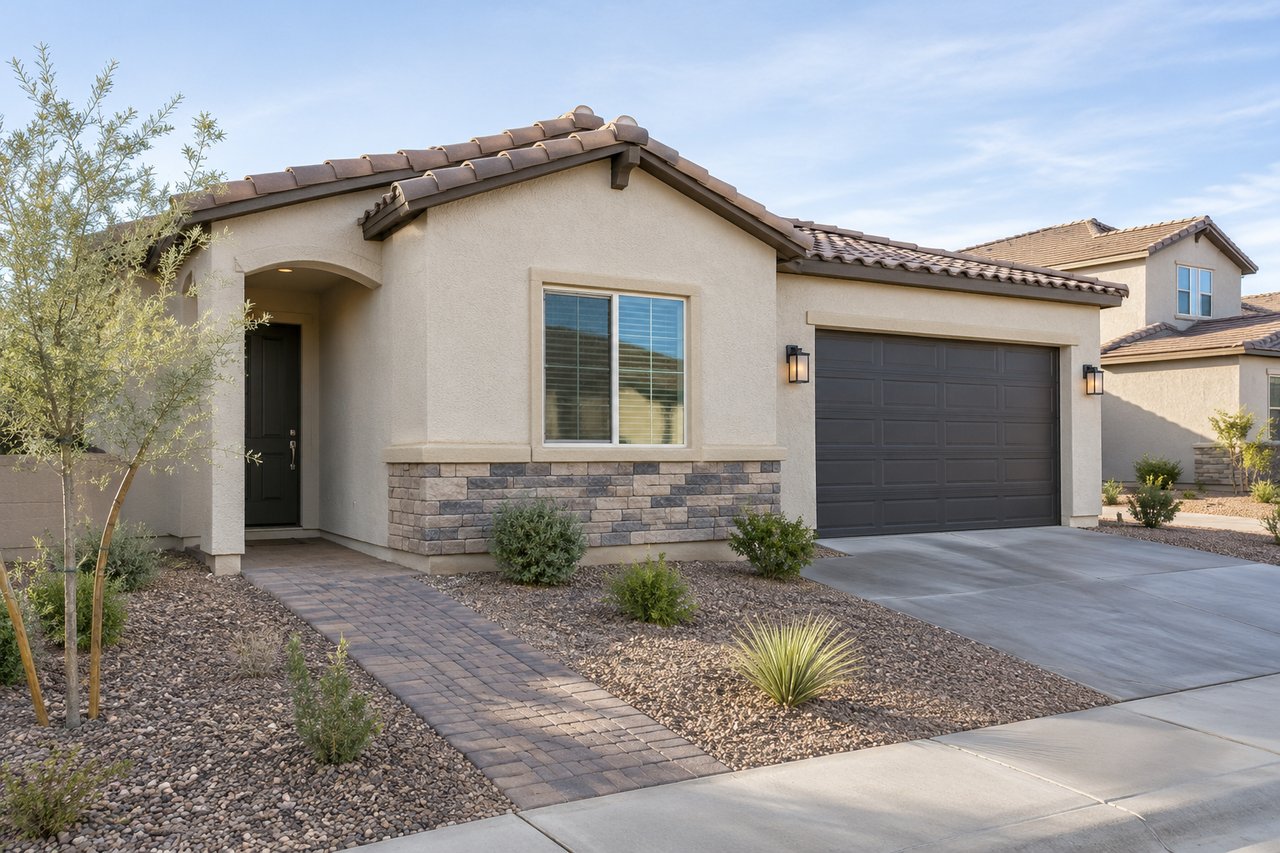
- New construction: Expect desert landscaping. Front yards are often included. Backyards, pools, patio covers and shade structures are usually the buyer's project and expense after closing, and new pools must meet the applicable size rules.
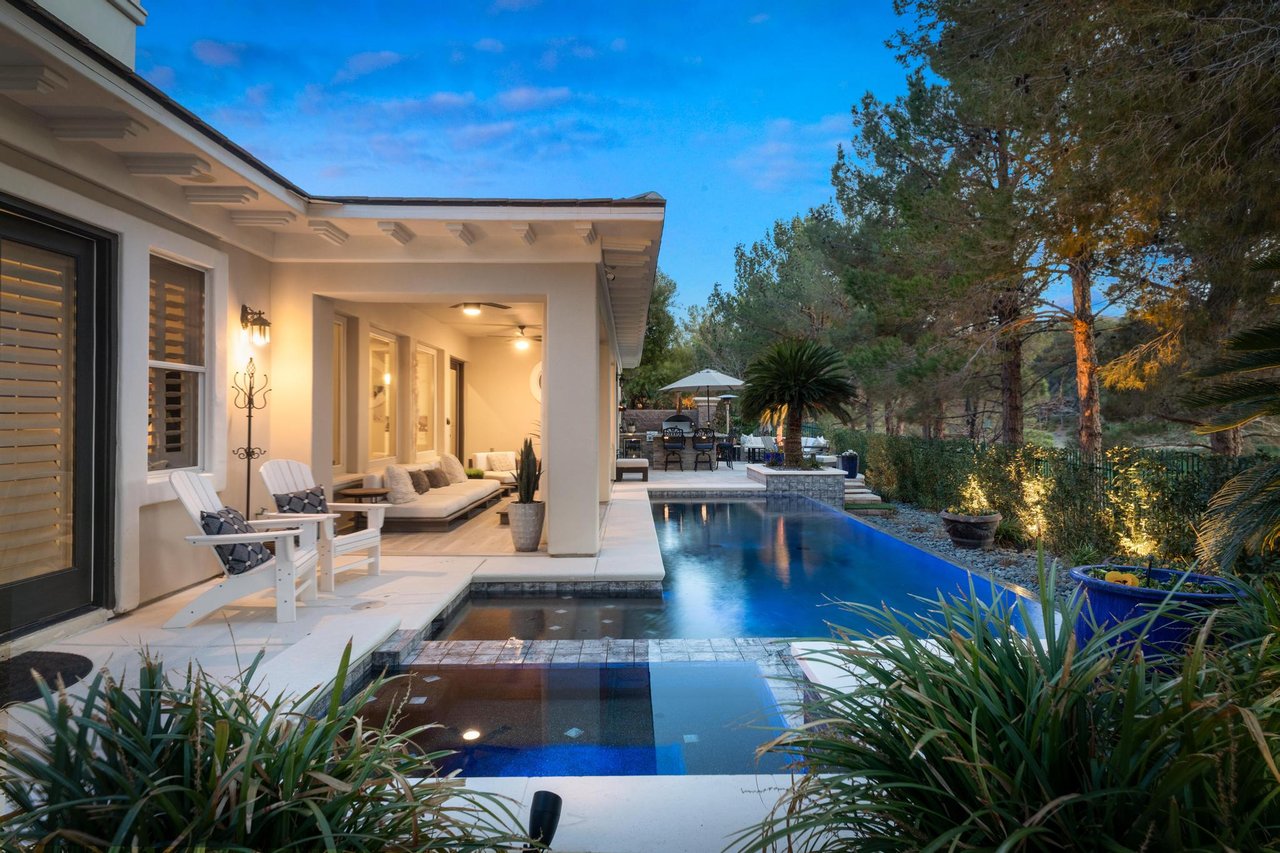
- Resale: An older home may already have a larger pool, mature shade trees and a finished backyard, which would cost money and time to recreate. Some older homes still have grass. Check SNWA's Water Smart Landscapes program before beginning a turf conversion; eligibility and program conditions apply.
See Las Vegas Watering Restrictions: Schedule & 2027 Turf Rules for current watering rules.
Maintenance: Warranties vs Track Record
New construction usually means lower maintenance in the first several years:
- New roofs, HVAC systems, water heaters and appliances
- Builder warranties. Terms vary by builder, so ask for the written warranty and what it covers each year.
- Energy-efficient construction built to current codes
- Separate legal protections may apply under NRS Chapter 40. Under NRS 11.202, the general construction-related statute of repose is 10 years from substantial completion, subject to exceptions. This is not a 10-year builder warranty; other deadlines and claim procedures may apply.
Resale homes have a track record. You can see how the home has held up, but systems may be closer to replacement. In Las Vegas, focus on:
- Age of HVAC systems, which work hard in desert summers
- Tile roof underlayment
- Water heaters and fixtures affected by hard water
- Pool equipment and surfaces
Inspect either way. New homes benefit from inspections too, including before drywall goes up and before closing, and again before the builder's warranty ends. See the Las Vegas Home Inspection Guide.
Financing: What's Different With New Construction
- Rate locks. A quick move-in home can close on a standard rate lock. A to-be-built home may need an extended lock or a float-down option, which can cost extra.
- Deposits. Builders often require an earnest money deposit at contract, plus extra deposits for upgrades. Ask which deposits are refundable and under what conditions.
- Appraisals. In a new phase with few closed sales, the appraiser may rely on the builder's own recent sales and nearby resales. Upgrades don't always add their full cost to the appraised value.
- Special assessments. Some newer communities have special improvement or local improvement districts (SIDs or LIDs) that add to the property tax bill. Verify any assessment, remaining balance and payment schedule in the property documents before you sign, whether buying new or resale.
- Resale financing works the way most buyers expect: any lender, a standard appraisal and a standard rate lock.
Completion Timelines
Type | Typical timeline | What to watch |
|---|---|---|
Resale | Commonly 30 to 45 days from accepted offer to closing | Inspection, appraisal and HOA resale package |
New construction, quick move-in | Similar to resale when the home is complete or nearly complete | Limited choice of finishes, final punch list |
New construction, to-be-built | Several months from contract to closing | Construction delays, rate lock length, coordinating the sale of your current home |
If you have to sell your current home first, timing matters. A quick move-in home or a resale home is usually easier to coordinate than a build with an estimated completion date.
Bring Your Agent on the First Visit
Many builders require your agent to register you at your first visit to the sales office. An unaccompanied visit can affect whether the builder recognizes or compensates your agent; registration policies vary. Contact your agent before visiting or registering online. Your agent can compare builder pricing with resales, explain transaction terms and negotiate incentives. Seek legal advice on contract provisions when needed. Discuss your buyer representation agreement before touring together. Compensation is negotiable, and any builder-paid amount should be confirmed in writing. See NAR's guide to written buyer agreements. Buy with h&e.
Which Is Right for You?
Choose new construction if you want:
- A home no one else has lived in, finished to your choices
- Builder warranties and lower early maintenance
- Builder financing incentives
- Customization and flexibility to accommodate a construction timeline
Choose resale if you want:
- Finished landscaping, mature trees or a larger pool
- An established neighborhood with less nearby building activity, depending on location
- Room to negotiate on price and repairs
- A closing often achievable in 30 to 45 days, subject to contract and financing
Frequently Asked Questions
Is it cheaper to buy new construction or resale in Las Vegas?
It depends on what's included. A new home's base price usually excludes upgrades, lot premiums and backyard landscaping, while a resale price usually includes them. Compare the purchase price plus finishing and repair costs, then assess closing credits and monthly payments separately.
What incentives do Las Vegas builders offer?
Builders commonly offer mortgage rate buydowns, closing-cost credits and design-center credits, often tied to their preferred lender. Loan programs cap how much a builder or seller can contribute.
Do new homes in Las Vegas come with landscaping?
Front yards are often included, but backyards are usually left to the buyer. New-development turf restrictions and new-pool size limits also affect backyard plans. Confirm requirements with the local jurisdiction and water provider.
Should I get an inspection on a new construction home?
Yes. A new home can still have construction defects. Many buyers schedule a pre-drywall inspection, a final inspection before closing and another inspection before the builder's warranty expires.
How long does it take to build a new home in Las Vegas?
To-be-built homes typically take several months from contract to closing. Quick move-in homes that are already finished or nearly finished can close on a timeline similar to resale.
Can I use my own lender for new construction?
Usually, yes, but builder incentives are often tied to the builder's preferred lender. Compare the builder's offer against an independent Loan Estimate before you decide.
Do I need a real estate agent to buy new construction?
You can buy without your own agent, but representation can help you compare costs, contract terms and incentives. Many builders have first-visit registration requirements. Compensation is negotiable; confirm any builder payment in writing and review your buyer representation agreement before touring together.
Does Nevada provide a 10-year new-home warranty?
No blanket 10-year builder warranty is established by the statute of repose. Written warranty terms vary. NRS 11.202 generally sets a 10-year period from substantial completion for certain construction-related actions, subject to exceptions. Other claim deadlines and procedures may apply.
Compare New Construction and Resale With huntington & ellis
Choosing between a new build and an established home in Las Vegas, Henderson or Summerlin? Our agents can help compare available homes, included features, finishing costs and written incentives. We can also help coordinate lender comparisons so you can evaluate closing cash and monthly payments alongside the purchase price.
This article is general information, not legal or lending advice. Builder terms, incentives and warranties vary by builder and community.