Las Vegas Home Inspection Guide: What Desert Homes Need Checked
Quick answer: A standard Las Vegas home inspection covers the structure, roof, plumbing, electrical, heating and air conditioning, exterior and site drainage, as required by Nevada's standards of practice for certified inspectors (NAC 645D). Desert homes deserve extra attention in five areas: air conditioning performance, tile roof underlayment, grading and drainage, pools and spas, and solar equipment. Nevada's standards don't cover pools, spas, solar systems, termites, mold or radon. If the home has any of those, or if the general inspection flags a concern, plan on a specialist inspection during your due diligence period.
A home in Las Vegas faces conditions most inspection checklists were never written for: summer heat that keeps air conditioners running for months, intense sun on roofs and equipment, very hard water, soils that can swell and shrink, and short, heavy monsoon storms. Here's what a general inspection includes in Nevada, which desert-specific issues to watch for, and when it's worth bringing in a specialist.
What a Nevada Home Inspection Covers
Nevada certifies home inspectors under NRS and NAC Chapter 645D, administered by the Nevada Real Estate Division. The official Nevada standards of practice cover the following readily accessible systems and components:
- Interior components (NAC 645D.480): walls, floors and ceilings; stairs and railings; representative doors, windows and cabinetry; and visible indications of moisture damage.
- Insulation and ventilation (NAC 645D.500): accessible insulation and ventilation systems, including appropriate attic observations.
- Plumbing (NAC 645D.510): hot and cold water supply, drains, waste and vent systems, readily accessible gas lines, and the water heater's type, energy source and safety devices.
- Electrical (NAC 645D.520): main and subpanels, a representative sample of switches, outlets and fixtures, and GFCI protection.
- Heating (NAC 645D.530) and air conditioning (NAC 645D.540): equipment, distribution systems and operating controls.
- Exterior (NAC 645D.550): walls and wall coverings, trim, a representative sample of windows and doors, and porches, decks, balconies and carports.
- Roof and attic (NAC 645D.560): roof covering, flashing, ventilation, penetrations and skylights, roof drainage, and the type, condition and approximate thickness of attic insulation.
- Site, grading and drainage (NAC 645D.580): land grade, water drainage, retaining walls that affect the structure, driveways, walkways and patios.
- Structural systems (NAC 645D.570): foundation, floors, walls, columns, ceilings, roof framing and visible evidence of structural damage or water intrusion.
What the standards don't require:
- No moving belongings or insulation. Inspectors don't have to move furniture, stored items or insulation that blocks access (NAC 645D.450).
- No operating shut-down systems. Inspectors may not turn on systems that are shut down or inoperable (NAC 645D.470).
- No mold or radon testing unless the inspector holds a separate license or certification for it (NAC 645D.470).
- No pools, spas, solar systems or wood-destroying pests. The standards don't include them at all, so coverage depends on the inspector you hire.
Before you schedule, confirm that your inspector is certified by the Nevada Real Estate Division. Ask for a sample report, and ask exactly what the inspection includes and what costs extra.
Desert-Specific Concerns, System by System
Air Conditioning and HVAC Performance
In Las Vegas, the air conditioner is the system you can least afford to have fail. It runs hard for much of the year, and a failure in July is an emergency, not an inconvenience.
What to ask your inspector to check:
- Age and data plates. Find out the age of each condenser and air handler. Many homes have more than one system, and they may be different ages.
- Refrigerant type. Older systems may use R-22, which the EPA phased out of new production and import in 2020. That makes repairs on those systems more expensive.
- Cooling performance. The inspector should measure the temperature difference between the return and supply air, and check whether every room actually gets cool.
- Ductwork in the attic. Attic temperatures get extreme in summer. Look for disconnected, crushed or poorly insulated ducts.
- Condensate drains and pans. Clogs and overflows can damage ceilings.
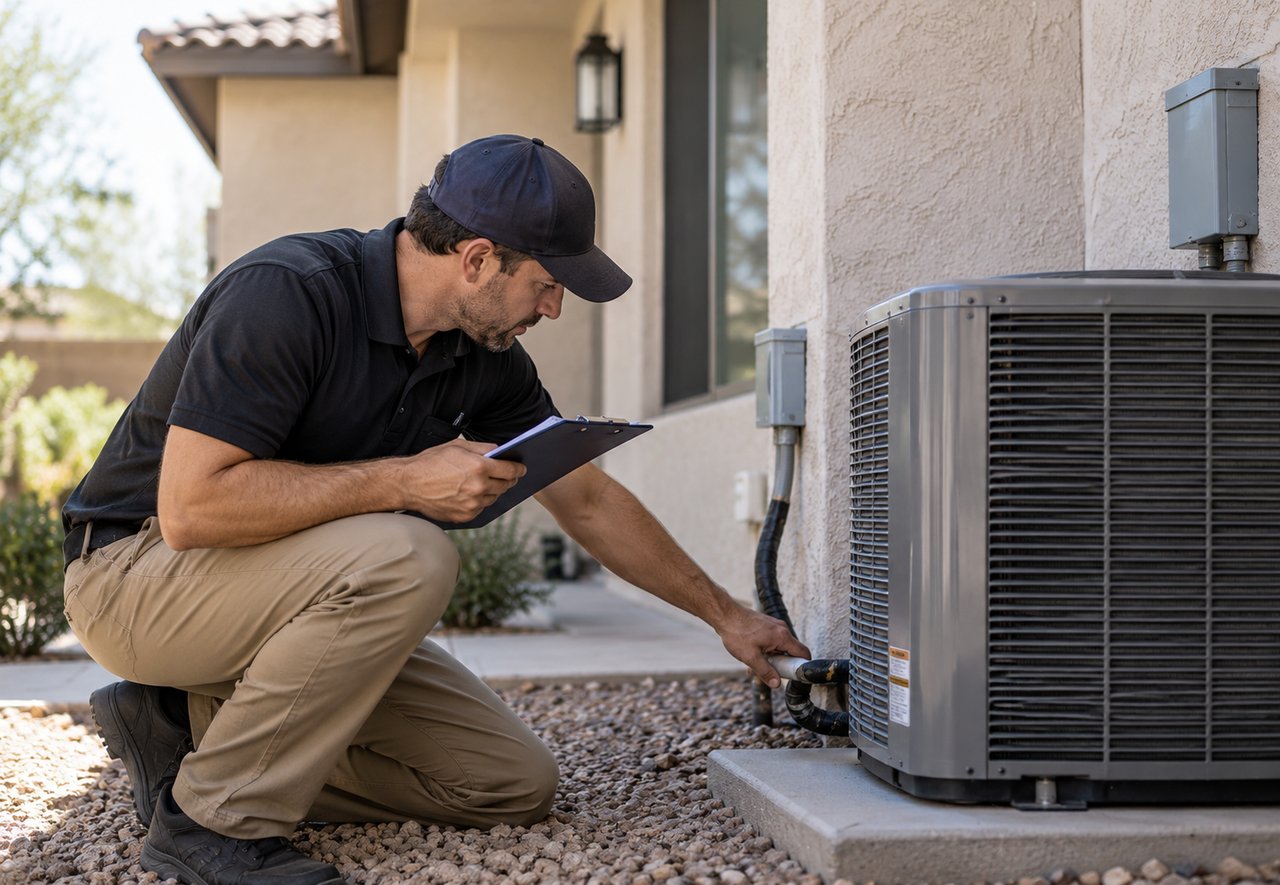
- Condenser condition. Check for sun damage to wiring and refrigerant line insulation, and debris or tight clearances around the unit.
When to call an HVAC contractor: When a system is near the end of its expected life, uses R-22, cools unevenly, or the general inspector recommends further evaluation. A licensed HVAC contractor can test refrigerant charge, airflow and electrical components, which go beyond a visual inspection.
Roofing: Look Beneath the Tile
Concrete and clay tile are common on Las Vegas homes. The tile itself sheds most of the water, but the underlayment beneath it is the secondary barrier that keeps water out of the house. A tile roof can look fine from the street while the underlayment underneath has deteriorated.
What to look for:
- Cracked, slipped or missing tiles, especially where foot traffic from satellite or solar installers may have damaged them.
- Underlayment condition at exposed areas. Roofing manufacturer Eagle Roofing points to eaves, hips, ridges and penetrations (vents and chimneys) as the spots most exposed to wind-driven rain.
- Flashing and penetrations, including any holes made to mount solar panels.
- Flat or low-slope sections on patio covers and some roof designs, where water can pond.
- Attic stains that suggest past or active leaks.
When to call a roofer: When the inspector notes damaged tile, underlayment concerns, signs of leaks, or can't safely walk the roof. A roofing contractor can lift tiles to assess the underlayment and tell you whether the roof needs repairs, a lift and re-lay of the existing tile, or a full reroof.
Grading, Drainage and Soils
Las Vegas receives relatively little annual rainfall, but intense storms can produce rapid runoff and localized flooding. Review site grading, drainage paths, retaining walls and nearby wash conditions, and check the property's flood-zone designation when evaluating risk.
Soil is a concern too. Research on the Las Vegas Valley has documented areas of expansive soils, which swell when wet and shrink as they dry. The valley also has caliche, a naturally cemented soil layer, in many areas.
What to look for:
- Grading that slopes toward the house instead of away from it.
- Drip or sprinkler irrigation soaking soil next to the foundation.
- Cracks in stucco, slab, garage floors and block walls. Some hairline cracking is common, but wide, stepped or uneven cracks deserve a closer look.
- Doors and windows that stick or are out of square.
- Leaning or cracked block walls and retaining walls.
- Efflorescence, a white mineral residue on block or stucco that signals moisture moving through it.
When to call a structural engineer: When the inspector reports significant cracking, movement, out-of-level floors or retaining wall problems. An engineer can tell you whether the issue is cosmetic, stable or active, and what a repair would involve. If drainage is the issue, a landscape or drainage contractor can recommend regrading or other solutions. You can also check the property's flood zone designation on FEMA's flood maps.
Pools and Spas
Because Nevada's standards of practice don't include pools and spas, some general inspectors leave them out and others offer them as an add-on. Ask before you book.
What a pool and spa inspection typically covers:
- The pool surface, including plaster or pebble finish, tile and coping, cracks and calcium buildup. Las Vegas water is very hard, about 16 grains per gallon per the Las Vegas Valley Water District, so scale and mineral deposits are common.
- Equipment: pump, filter, heater, chlorinator or salt cell, automation and timers.
- Electrical safety: bonding, GFCI protection and lighting.
- Safety features: fencing, self-closing gates, door alarms and drain covers.
- Decking: cracks and drainage around the pool.
When to get a specialist: When your general inspector doesn't include the pool, when water loss is suspected (a leak detection company can pressure-test the lines), or when the equipment is older or the surface shows significant wear.
Solar Equipment
Rooftop solar is common in Las Vegas, and it affects both the roof and the transaction. Start by finding out how the system is owned:
- Owned outright: Confirm the panels and related equipment are included in the sale and identify any warranties or transfer documents.
- Financed: There may be a loan or a lien tied to the system that has to be paid off or assumed.
- Leased or under a power purchase agreement (PPA): A third party may own the panels. Review transfer, credit approval and payment requirements before agreeing to assume any contract.
What to review and inspect:
- Documents. Get the contract, warranties, transfer requirements and recent production data.
- Roof mounting. Check the mounting and roof penetrations for leaks or damaged tile.
- Inverters and electrical connections for visible damage, error codes and proper labeling.
- Batteries, if present.
- Production. Compare actual production to what was expected.
- Utility arrangement. Confirm with the seller and NV Energy how the net metering or billing setup carries over to a new owner.
When to get a specialist: Nevada's standards of practice don't include solar systems. Have a solar contractor evaluate the system if production looks low, the inverter shows errors, the panels sit on a roof with leak concerns, or you're taking over a lease. Removing and reinstalling panels for a future reroof adds cost, so review the roof and the solar system together.
Other Las Vegas Issues Worth Checking
- Hard water. Look for scale on fixtures and in the water heater, and check whether a water softener is installed and working.
- Termites. Wood-destroying insect inspections in Nevada are done by pest control businesses licensed through the Nevada Department of Agriculture. Some lenders require one.
- Scorpions and other pests. Ask the seller about pest service history.
- Plumbing materials. Older homes may have materials that insurers or buyers look at more closely. A sewer scope can check the line from the house to the street.
- Sun exposure. Look for UV-damaged exterior paint, window seals, garage door weatherstripping and irrigation parts.
When to Order Specialist Inspections
Specialist inspection | Consider it when |
|---|---|
HVAC contractor | The system is older, uses R-22, cools unevenly or was flagged by the general inspector |
Roofing contractor | Tile is damaged, underlayment is a concern, there are signs of leaks or the roof couldn't be walked |
Structural engineer | There's significant cracking, movement, out-of-level floors or retaining wall issues |
Pool and spa inspector | The home has a pool or spa that your general inspector doesn't cover |
Pool leak detection | The pool loses water or the seller reports frequent refilling |
Solar contractor | Production is low, the inverter shows errors, the roof has leak concerns or you're taking over a lease |
Wood-destroying insect (termite) inspection | Your lender requires one, or you see signs of termite activity |
Sewer scope | The home is older, has mature trees near the line or has a history of drain backups |
Mold testing | There's evidence of a leak, water damage or musty odors |
Radon testing | You want peace of mind or the lender requires it |
Typical costs: Home inspection pricing varies with square footage, age, accessibility, number of systems and inspector scope. Pool, termite, sewer, roof, mold and radon assessments may have separate fees. Request itemized written quotes from local inspectors before scheduling; published national or marketplace averages may not reflect your property.
How to Get the Most From Your Inspection
- Schedule early in your due diligence period so there's time for follow-up specialist inspections.
- Make sure all utilities are on, including gas, water and power, so every system can be tested.
- Attend the end of the inspection so the inspector can walk you through the findings in person.
- Read the full report, not just the summary. Sort the findings into safety issues, major repairs and routine maintenance.
- Get repair quotes from licensed contractors before you ask the seller for repairs or credits.
- Ask the seller for records, including HVAC service history, roof repairs, pool equipment receipts and solar documents.
What Las Vegas Homebuyers Should Know Before Their Inspection
An inspection report is a starting point for understanding a property's condition, not a guarantee that every problem will be discovered. In the Las Vegas Valley, the next step may be a targeted roof, HVAC, pool or structural evaluation depending on the age of the home and the inspector's findings.
At huntington & ellis, A Real Estate Agency, our local real estate agents help buyers keep track of contract inspection deadlines, request relevant seller records, arrange appropriate follow-up evaluations and discuss repair requests or credits when permitted by the purchase agreement. Repair decisions, costs and contract rights depend on the specific home and transaction.
For more local context, explore our Henderson vs. Las Vegas comparison, and Las Vegas home price analysis.
Frequently Asked Questions
What does a home inspection include in Nevada?
Nevada standards cover accessible interior, insulation and ventilation, plumbing, electrical, HVAC, exterior, roofing, structural systems, and site grading and drainage components. Inspectors report observable conditions within the limits of the inspection; specialized testing is not automatically included.
Does a Las Vegas home inspection include the pool?
Not necessarily. Nevada's standards of practice don't include pools and spas, so some inspectors charge extra and others don't inspect them at all. Confirm before you book.
Do home inspectors check solar panels?
Nevada's standards don't require it. A general inspector may note visible issues, but a solar contractor should evaluate system performance, inverters and the roof mounting, especially if you're taking over a lease or PPA.
How much does a home inspection cost in Las Vegas?
Pricing varies with the size and condition of the property and the services included. Ask local certified inspectors for itemized quotes, especially if you need separate pool, termite, sewer, HVAC or roof evaluations.
Do I need a termite inspection in Las Vegas?
It's often a good idea, and some lenders require one. Wood-destroying insect inspections in Nevada are done by pest control businesses licensed through the Nevada Department of Agriculture.
Why is the roof underlayment important in Las Vegas?
On tile roofs, the underlayment is the barrier that actually keeps water out of the house. The tile can look intact while the underlayment beneath it has deteriorated, so a roofing contractor may need to lift tiles to check it.
Are cracks in a Las Vegas home a sign of foundation problems?
Not always. Hairline stucco and slab cracks are common, but wide, stepped or uneven cracks, sticking doors or leaning walls should be evaluated by a structural engineer, especially since parts of the valley have expansive soils.
Can an inspector test for mold or radon?
Only if the inspector holds a separate license or certification for it. Nevada's standards don't allow certified inspectors to determine whether hazardous substances like mold or radon are present otherwise.
How long does a home inspection take in Las Vegas?
The time depends on the home's size, age, condition, accessibility and the inspection scope. Ask the inspector for a property-specific estimate and schedule enough time to review the report before your contract deadline.
Can a buyer negotiate repairs after a home inspection in Nevada?
A buyer may request repairs, a credit or another solution after reviewing inspection results, but the seller does not automatically have to agree. The options and deadlines depend on the purchase agreement. Discuss the contract and proposed requests with your real estate agent.
What happens if a Las Vegas home fails inspection?
Most general home inspections do not assign a universal pass-or-fail grade. They document observed conditions and recommend follow-up where appropriate. Buyers should prioritize safety issues, major systems and costly defects, then review contractual options with their agent.
Sources and Further Reading
This guide is general information. Inspection scope varies by inspector, so confirm what's included before you book.