Published September 15th, 2026
Right now, a well-priced home in the Las Vegas Valley is typically going under contract in roughly 55 days, according to Zillow's tracking of the local market — though that number moves depending on price point, condition, and location. If your own listing has been sitting longer than that, or you're simply trying to plan a realistic Las Vegas home selling time before you list, this guide walks through what a normal timeline looks like in 2026 for anyone selling a home in Las Vegas, the specific factors that speed a sale up or slow it down, and the concrete steps sellers can take to keep their own timeline on track.
What "Days on Market" Actually Measures
Real estate professionals track a listing's "days on market" (DOM) as the number of days between when a home goes active on the MLS and when the seller accepts an offer — it is not the same as the total time from listing to closed sale. Once a Las Vegas buyer and seller are under contract, escrow still has to run its course: cash transactions typically close within one to two weeks, while financed purchases usually take several additional weeks to account for loan underwriting, according to huntington & ellis's own tracked transaction timelines.
Nevada law adds one more fixed date to that timeline. Under NRS 113.130, sellers must serve a completed Seller's Real Property Disclosure form at least 10 days before the property is conveyed to the buyer. If that disclosure is late or missing, NRS 113.150 gives the buyer the right to rescind the purchase agreement without penalty — one more reason to get paperwork moving early rather than let it become an avoidable delay. Altogether, a financed sale in the Las Vegas Valley usually runs about two to three months from list date to closing.
Typical Las Vegas Home Selling Time in 2026
As of early 2026, the median time for a Las Vegas home to go from active listing to pending sale sits at about 55 days, according to Zillow's home value index for the metro. That figure is a useful benchmark, but the Las Vegas real estate market has shifted over the course of the year: Las Vegas Realtors data reported by the Las Vegas Review-Journal on September 9, 2026 shows home sales falling 11.9% from July to August, with 2,252 existing homes, condos, and townhomes changing hands in August. The median single-family sale price eased to $475,000 — down 1% from a year earlier and off its May/June peak of $490,000 — while condo and townhome prices held closer to flat at $299,900.
Inventory has grown alongside that slowdown: 7,590 single-family homes and 2,714 condos were sitting on the market without an accepted offer as of that report, up roughly 5–6% year-over-year in both categories. The Las Vegas Realtors president described the resulting supply as "just over four and a half months" of inventory — up slightly from a year earlier. More supply paired with softer demand generally means homes take longer to sell than they did during the tightest years of the post-2020 market, so sellers today should plan around a home sale timeline closer to two months to reach contract, not two weeks.
The Price Point Sets the Pace
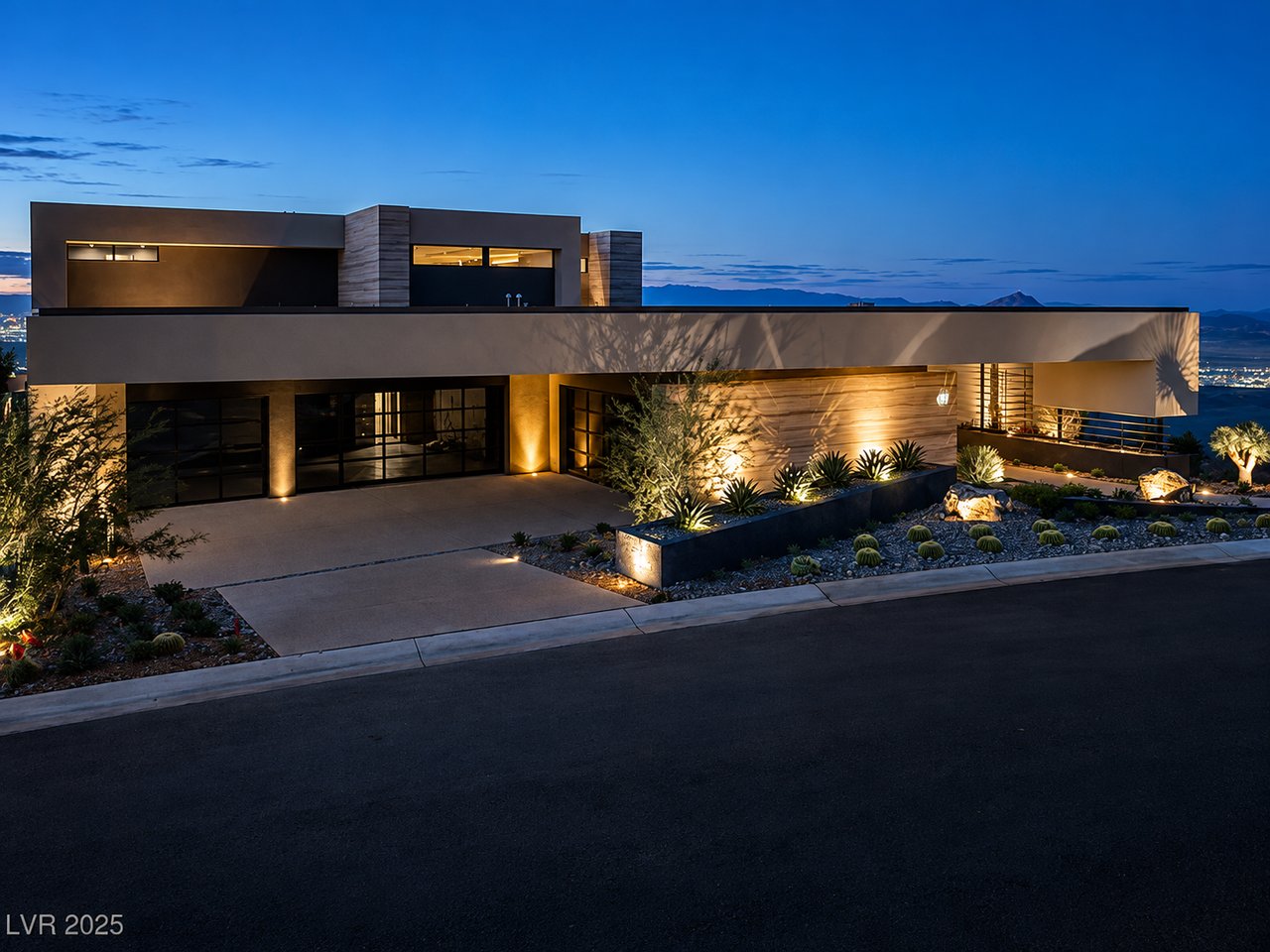
Price point is one of the biggest levers on how long a Las Vegas home sits on the market. Valley-wide figures blend every price tier together, but entry-level and move-up homes typically draw a far larger buyer pool than luxury properties, which sell more slowly simply because there are fewer qualified buyers shopping in that range. Nevada's $1 million-and-above segment recorded 193 closed sales at a median price of $1.4 million in a recent monthly snapshot of the market, according to Norada Real Estate Investments — a fraction of the volume closing in the sub-$500,000 range over the same period. If you're selling a luxury property in a neighborhood like MacDonald Highlands or Southern Highlands, budget for a longer runway and lean harder on professional marketing (more on that below) to reach a smaller pool of qualified buyers.
Location Still Moves the Needle on Property Market Trends
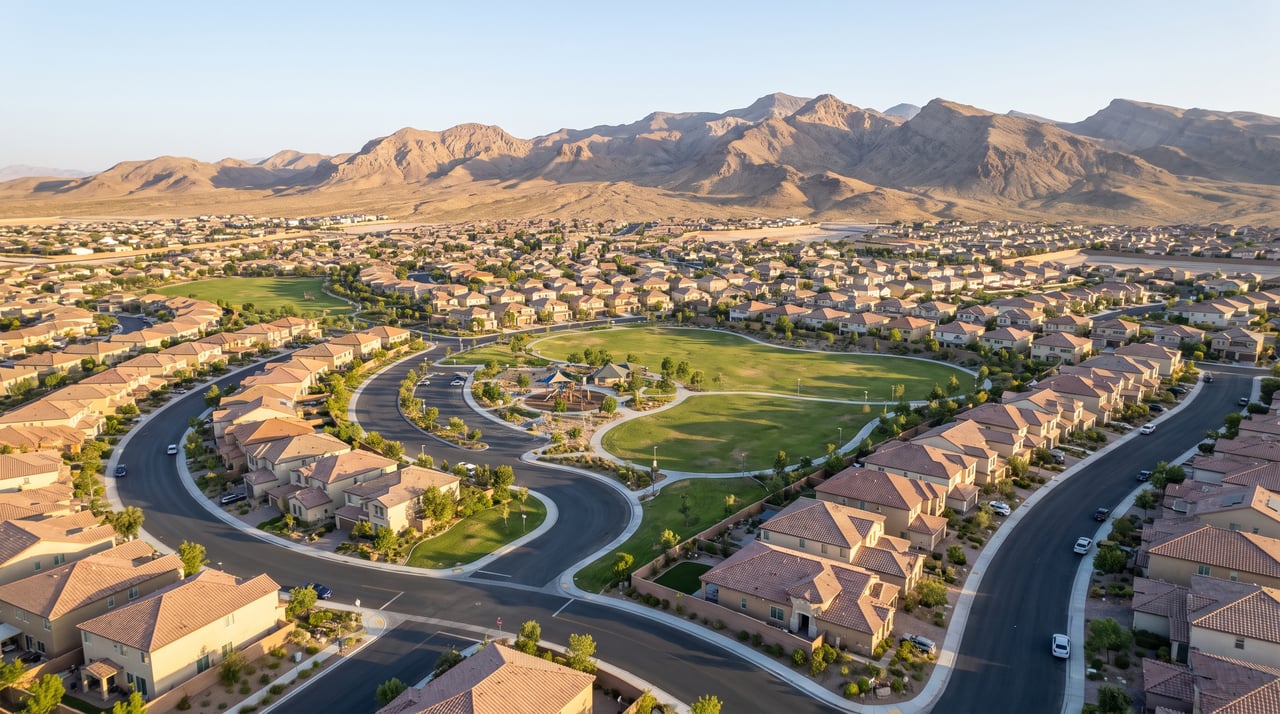
Days on market also varies by submarket. Buyer demand in master-planned communities like Summerlin and Henderson has historically held up well, largely due to amenities, school zoning, and proximity to employment centers — factors that shape local property market trends even when valley-wide numbers look flat. A home in Green Valley is competing against a different inventory pool than one in North Las Vegas, so the right price — and the realistic timeline — for each depends on what else is actively listed and recently sold within a half-mile to a mile of the property, not just the valley-wide median.
Pricing Strategy: The Factor Sellers Control Most
Of every factor in this article, pricing is the one sellers have the most direct control over — and it is usually the one that does the most damage when it's wrong. A home priced to match recent, comparable closed sales in its immediate area typically attracts the most showings and offers in its first two to three weeks on the market, when buyer and agent attention is highest. List too high, and a property tends to sit through that critical early window, then require one or more price reductions later — by which point buyers tracking days-on-market data may assume something is wrong with the home rather than the price. An experienced local agent prices from the most recent closed comps, not just active listings, which reflect what sellers hope to get rather than what buyers are actually paying.
Condition, Staging, and First Impressions
Presentation matters more when there's more competing inventory. According to the National Association of Realtors' 2025 Profile of Home Staging, 83% of buyers' agents said staging a home made it easier for buyers to picture themselves living there, and 60% said staging affected how at least some buyers felt about a property. Living rooms, primary bedrooms, and dining rooms were the most commonly staged spaces. None of this requires a full professional staging contract — decluttering, deep cleaning, neutralizing paint colors, and fixing obviously deferred maintenance (a leaking faucet, a cracked window, worn carpet) address the same buyer psychology at a fraction of the cost, and they're worth doing before the first showing rather than after the first round of feedback.
Marketing and Professional Photography
Most buyers now begin their search online, which means a listing's photos, floor plan, and video walkthrough are doing the work an open house used to do. Professional photography, accurate square footage, and a listing description that highlights a property's actual features — an updated kitchen, lot size, a recent roof or HVAC replacement — all shorten the time a home spends being scrolled past rather than clicked into. This is also where an established brokerage's marketing reach matters: wider syndication and a larger local agent network mean more of the right buyers see a listing in its first days on the market, when it's getting the most visibility on major listing sites.
Seasonality in the Las Vegas Real Estate Market
Listing activity in Las Vegas still follows a seasonal rhythm even without harsh winters: spring and early fall tend to bring more active buyers into the market, partly because moves are often timed around the school calendar, and partly because summer's triple-digit heat can dampen in-person showing traffic. Listing during a higher-traffic window doesn't override pricing or condition, but it does put a home in front of a larger pool of active buyers at once, which supports the pricing strategy described above.
Financing and the Buyer Pool
Rising borrowing costs shrink the pool of buyers who can qualify at a given price point, which slows sales at every tier. Freddie Mac's Primary Mortgage Market Survey put the average 30-year fixed mortgage rate at 6.71% for the week ending September 3, 2026, up from 6.50% a year earlier — a modest year-over-year increase, but enough to change monthly payments for buyers near the edge of qualifying. Sellers can't control mortgage rates, but they can control how prepared their buyer pool is: requiring proof of funds or a full underwritten pre-approval, rather than just a pre-qualification letter, before accepting an offer reduces the risk of a financing-related delay later in escrow. Buyers who want a clear read on what they can actually qualify for before writing an offer can start that process with a lender like note. A Mortgage Agency.
Why the Agent You Choose Affects Your Timeline
An agent's pricing accuracy, negotiation experience, and marketing reach are hard to see from the outside, but they show up directly in how long a home sits on the market and how close the final price lands to the list price. huntington & ellis agents closed nearly 2,500 residential transactions across the Las Vegas Valley in 2025, totaling $1.44 billion in sales volume, with individual agents averaging more than 18 transactions each — well above what a typical part-time agent handles in a year, according to huntington & ellis's own brokerage data. That volume of repeat transaction experience across neighborhoods from Henderson to Summerlin is what lets an agent price a listing accurately on day one instead of guessing and correcting later.
Las Vegas Selling Time, By the Numbers • $1.44 billion — huntington & ellis's total closed sales volume across the Las Vegas Valley in 2025 (source) • ~2,500 transactions — residential sales closed by huntington & ellis agents in 2025 (source) • 18+ transactions — average per huntington & ellis agent in 2025, versus a typical part-time agent (source) • 55 days — median valley-wide time from listing to pending sale, early 2026 (source) • ~4.5 months — single-family housing supply as of August 2026 (source) |
A Seller's Checklist to Keep Your Timeline on Track
- Price to the last three to six months of closed comps in your immediate area — not active listings, and not last year's market.
- Get the Nevada Seller's Real Property Disclosure form completed and served early, well ahead of the NRS 113.130 ten-day window, so it never becomes a rescission risk under NRS 113.150.
- Address deferred maintenance and declutter before professional photos are taken, not after the first round of buyer feedback.
- Invest in professional photography and light staging of the living room, primary bedroom, and dining area, where staging has the most documented impact on buyer perception.
- Require proof of funds or a full underwritten pre-approval, not just a pre-qualification letter, before accepting an offer.
- List during a higher-traffic window (spring or early fall) when your timeline allows, and be ready to revisit price quickly if the first two to three weeks don't generate offers.
- Work with an agent who prices from recent, hyper-local closed data rather than valley-wide averages.
Frequently Asked Questions
How long does it typically take to sell a house in Las Vegas right now?
As of early 2026, the median time from an active listing to an accepted offer in the Las Vegas Valley is about 55 days, according to Zillow. Because that figure blends every price range and condition together, a well-priced, well-presented home in good condition often goes under contract faster, while an overpriced or dated listing can sit well past the two-month mark.
What counts as a "fast" sale in today's Las Vegas market?
With single-family housing supply running at roughly four and a half months as of August 2026, per Las Vegas Realtors data reported by the Las Vegas Review-Journal, a listing that accepts an offer within its first two to three weeks is performing well above the current market average. Homes selling that quickly are almost always priced at or slightly below recent comparable sales.
Does pricing a home too high really slow down the sale?
Yes. The first two to three weeks after a listing goes live typically generate the most buyer and agent attention it will ever get. A home priced above what recent comparable sales support usually sits through that window, then needs one or more price corrections — and buyers tracking days-on-market data may view a long-sitting, recently reduced listing more skeptically than one priced correctly from day one.
How much does home staging actually affect how quickly a Las Vegas home sells?
According to the National Association of Realtors' 2025 Profile of Home Staging, 83% of buyers' agents said staging made it easier for buyers to visualize living in a home, and 60% said it affected how at least some buyers felt about a property. Staging doesn't guarantee a faster sale on its own, but it removes one more reason for a buyer to hesitate.
Is spring or fall really a better time to sell in Las Vegas?
Spring and early fall tend to bring more active buyers into the Las Vegas market, partly because moves are often timed around the school calendar and because the region's summer heat can reduce in-person showing traffic. Listing in a higher-traffic window doesn't override pricing or condition, but it does put a home in front of more buyers at once.
How does the Las Vegas luxury market (over $1 million) differ in selling time?
Luxury inventory draws from a much smaller buyer pool. Nevada's $1 million-plus segment recorded 193 closed sales at a median price of $1.4 million in a recent monthly snapshot, according to Norada Real Estate Investments — a fraction of the volume in the sub-$500,000 range. Luxury sellers should generally plan for a longer timeline and invest more heavily in professional marketing to reach qualified buyers.
What's the difference between "days on market" and the total time to close?
Days on market measures the time from an active listing to an accepted offer. Once a home is under contract, escrow still needs to run its course — cash sales typically close within one to two weeks, while financed sales usually take several additional weeks for loan underwriting and to satisfy Nevada's mandatory 10-day property disclosure period under NRS 113.130. Altogether, a financed sale in the Las Vegas Valley typically takes about two to three months from listing to closing.
My house has been listed for a while with no offers — what can I actually do about it?
Start with price: pull the most recent closed comps, not active listings, within a half-mile to a mile of the property and compare your list price honestly against them. From there, review your photos and listing description for accuracy and quality, address any obvious deferred maintenance, and ask your agent for real feedback from the showings and agents who have already toured the home rather than assuming the market will eventually catch up to the price.
Sources
• huntington & ellis — Brokerage statistics
• huntington & ellis — "How to Hire a Las Vegas Agent for Selling a House Fast"
• Las Vegas Review-Journal — "Home sales are slowing in Southern Nevada, report says" (Sept. 9, 2026)
• Zillow — Las Vegas, NV Home Values
• Norada Real Estate Investments — Las Vegas Real Estate Market
• National Association of Realtors — 2025 Profile of Home Staging
• Freddie Mac — Primary Mortgage Market Survey
• Nevada Legislature — NRS 113 (Disclosures in Sales of Real Property)
Ready to Talk Timeline?
Every Las Vegas home selling time comes down to the same handful of levers: price, condition, marketing, and the buyer pool a listing can actually reach. Get those right, and 55 days becomes a ceiling instead of a floor. If you're weighing when to list, what your home might realistically sell for, or how to shorten your own timeline, the team at huntington & ellis is happy to walk through your specific property and neighborhood with you.